
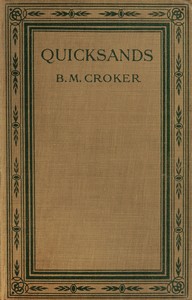
Quicksands by B. M. Croker
I picked up Quicksands expecting a breezy period drama, but B.M. Croker delivers something much sharper and more unsettling. Published in the late 1800s, it feels surprisingly modern in its focus on psychological tension.
The Story
We meet Sybil, a bright and independent young woman who makes what looks like a brilliant match with the celebrated artist, Everard Lennard. He's older, worldly, and sweeps her off her feet. But after the wedding, the fairy tale crumbles. Everard isn't just moody; he's possessive, secretive, and cuts Sybil off from her friends and family. His studio is a locked sanctum, his past is a closed book, and his affection turns to ice. Sybil finds herself isolated in a beautiful home that feels like a prison, her spirit slowly being crushed by her husband's quiet tyranny. The plot revolves around her awakening to the danger she's in and her desperate, risky attempts to uncover the truth about the man she married and find a way out.
Why You Should Read It
What grabbed me wasn't a whirlwind plot, but the creeping horror of Sybil's situation. Croker is a master of quiet dread. You feel the walls closing in as Sybil does. Everard is a fantastic villain—not a mustache-twirling monster, but a plausible, chillingly controlled man who uses respectability and gaslighting as his weapons. Sybil's fight isn't against a ghost or a criminal; it's against the entire expectation that a wife should be obedient and content, even when she's miserable. It's a story about the terror of being truly seen and then systematically erased by someone who's supposed to love you.
Final Verdict
Perfect for readers who love a slow-burn psychological thriller dressed in Victorian lace. If you enjoy stories about complex, difficult marriages, hidden identities, and resilient heroines fighting for their autonomy, you'll devour this. It’s a gripping, sometimes frustrating, but ultimately satisfying look at a woman learning to trust her own instincts in a world that tells her not to. A real hidden gem from the past that still packs a punch.
This text is dedicated to the public domain. Knowledge should be free and accessible.
Emily Miller
9 months agoAs a professional in this niche, the historical context mentioned in the early chapters is quite enlightening. A trustworthy resource that I'll keep in my digital library.
Mary Martin
6 months agoGreat value and very well written.
Paul Davis
11 months agoThe balance between academic rigor and readability is perfect.
Robert Miller
1 year agoI found the data interpretation to be highly professional and unbiased.



Kimberly Thomas
4 months agoThought-provoking and well-organized content.