
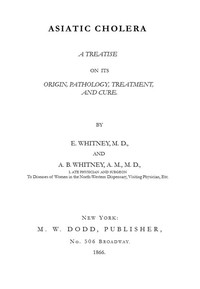
Asiatic Cholera: A treatise on its origin, pathology, treatment, and cure
Let's set the scene: It's the late 1800s. A terrifying disease called cholera is sweeping across continents, striking fast and lethally. In 'Asiatic Cholera,' A.B. Whitney isn't telling a fictional tale; he's laying out the battle plan from the front lines of a medical war. The book is his comprehensive guide, written for doctors and the public, on everything known (or thought to be known) about the disease at the time.
The Story
There's no traditional plot with heroes and villains, but the narrative is the disease's own terrifying journey and the human effort to stop it. Whitney walks us through the supposed origins of cholera, its horrific symptoms (which he describes in stark, clinical detail), and the various theories on what caused it. The 'action' is in the treatments: pages of recipes for medicines, advice on diet, and procedures for nursing the sick. You follow the logical (for the era) steps of a doctor trying to save a patient, based on the belief that the disease was a kind of blood poisoning or the result of miasma—bad smells from rotting matter.
Why You Should Read It
This book is fascinating because it's a snapshot of a pivotal moment in history, right before the germ theory changed medicine forever. Reading Whitney's absolute certainty about treatments we now know were ineffective is both humbling and gripping. You get a raw sense of the fear and urgency of the times. It’s not a dry textbook; it's a passionate argument from a man convinced he has the answers to a major crisis. You're not just learning what they thought, you're feeling the weight of their responsibility and the limits of their world.
Final Verdict
Perfect for history buffs, especially those interested in medical history or social history. If you enjoyed books like 'The Ghost Map' (about a London cholera outbreak) or just love primary sources that drop you directly into the past, this is a treasure. It's also great for anyone in the medical field who wants a profound appreciation for how far we've come. Fair warning: some descriptions of illness are graphic. This isn't a light read, but for the right reader, it's an absolutely captivating one. Think of it as an artifact and a story all in one.





Paul Perez
1 year agoEssential reading for students of this field.