eBooks
100 Books foundExploring the OVEIR Public Domain Literature Library
The OVEIR Public Domain Literature Library offers a curated selection of one hundred historical works on economics, trade, and commerce. Each book is accompanied by an editorial guide that provides context, highlights key themes, and suggests approaches for reading. This catalogue is designed for readers who wish to engage with these texts beyond mere digitization, offering pathways into the ideas and debates that shaped modern economic thought.
Browsing the Catalogue
Readers may browse the collection by category or by title. The archive is organized into two main categories: Economics, Trade & Labor: Texts & Context and History, Empires & Change: Texts & Context. Each category groups works that share thematic or historical connections. Within each category, titles are listed alphabetically; clicking on a book leads to its dedicated page with the full editorial guide.
For those who prefer a more focused search, the catalogue also supports browsing by author, period, or subject through the internal indexing system. The site navigation includes links to the archive, about page, and contact page.
Book Records and Information
Each book record displays the title, author(s), publisher, keywords, target reader, and a catalogue note. The catalogue note is an original editorial commentary that examines the work’s structure, argument, or historical significance. It does not replace the text but serves as a companion for deeper engagement. Keywords are drawn from standard library classifications and reflect the primary subjects covered.
The target reader field is set to "Readers of public-domain and historical texts," indicating that these editions are intended for a general audience interested in historical primary sources.
Source Attribution
All texts in this catalogue originate from Project Gutenberg, a digital library of public-domain works. The OVEIR Library adds editorial value by providing context, thematic analysis, and reading guidance. Each book page includes a link to the original Project Gutenberg e-text. We do not alter the underlying text; our contributions are limited to the supplementary editorial materials.
Categories Overview
The four categories reflect distinct but overlapping domains. Economics, Trade & Labor includes works that examine economic theory, production, finance, and labor relations, from Xenophon’s proposals for Athenian revenue to Keynes’s monetary reforms. History, Empires & Change Catalogue maintenance uses source records and bibliographic context. These categories are not exhaustive but serve as a starting point for exploration.
Three Practical Reading Paths
Readers interested in the foundations of classical economics might begin with Adam Smith’s An Inquiry into the Nature and Causes of the Wealth of Nations (ID 218), then move to Henry George’s Progress and Poverty (ID 283), and conclude with Ida Tarbell’s The History of the Standard Oil Company (ID 293) to see theory applied to industrial monopoly.
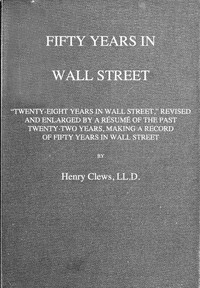
For those drawn to business history and entrepreneurship, a path could start with Daniel Defoe’s The Complete English Tradesman (ID 230), continue with Henry Clews’s Fifty Years in Wall Street (ID 308), and finish with John D. Rockefeller’s Random Reminiscences of Men and Events (ID 233) for a firsthand perspective on corporate power.
A third path focusing on money and finance might begin with Walter Bagehot’s Lombard Street (ID 220), proceed to Andrew Dickson White’s Fiat Money Inflation in France (ID 222), and end with John Maynard Keynes’s A Tract on Monetary Reform (ID 300) to trace the evolution of monetary thought.
Bibliographic dates and catalogue measurements
The catalogue distinguishes the Project Gutenberg digital release from a work’s original or first publication. Project Gutenberg is identified as the digital source for the edition available here; its release year is therefore shown as Gutenberg Release Year, not as the work’s original publication year.
When an explicit first-publication or issue date can be supported directly by the title or issue information, it may be shown separately as First Publication Year. When that date cannot be confirmed, the catalogue displays Not confirmed rather than guessing a year.
Where the source text can be measured reliably, the catalogue may provide word count and estimated reading time. These measurements describe reading scope and are not quality rankings.
The current catalogue contains 4 active subject categories: Economics, Finance Money, Commerce, and Labor Industry. Categories are browsing aids and may overlap where a work reasonably fits more than one subject.