
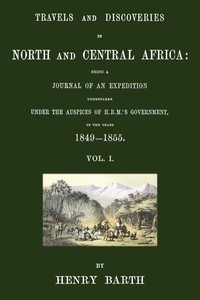
Travels and discoveries in North and Central Africa, Vol. 1 (of 5) : being…
In 1850, Heinrich Barth joined a British-sponsored expedition into the heart of Africa. The mission was supposed to last two years. It stretched to five and a half. This book, the first of five volumes, details his incredible journey from Tripoli, across the Sahara, and into what are now Niger, Nigeria, and Cameroon. It’s not a novel with a neat plot, but the narrative is driven by a simple, powerful goal: go where few Europeans have gone, and come back with knowledge.
The Story
The story follows Barth and his companions as they navigate a world of immense danger and beauty. They cross endless deserts, bargain with caravan leaders, and enter powerful African kingdoms like the Sokoto Caliphate. The journey is a constant struggle. Barth deals with hostile tribes, deadly illnesses like malaria, and the tragic deaths of his fellow explorers. But he also describes vibrant cities, complex societies, and landscapes that defy imagination. The ‘plot’ is his slow, painful, and meticulous work to map routes, record languages, and document histories that were only passed down orally. Every page is a step further into the unknown.
Why You Should Read It
You should read this because Barth is a fascinating guide. He wasn’t a typical 19th-century explorer looking to plant flags. He was a scholar. He took the time to learn local languages and customs. His observations are surprisingly respectful and detailed. When he describes the great market of Kano or the scholarly debates in Timbuktu, you feel his genuine curiosity. The book removes the ‘dark’ from ‘Dark Continent’ and shows a region full of life, trade, and politics. Yes, it’s a product of its time, but Barth’s voice often cuts through the prejudices of his era. You’re not just reading about geography; you’re reading about human resilience—both Barth’s and the people he lived among.
Final Verdict
This is not a breezy beach read. It’s a commitment. But it’s perfect for anyone who loves true adventure stories, armchair historians, and people curious about Africa before colonial borders were drawn. If you’ve ever wondered what it was really like to travel the Sahara 170 years ago, to sit with a sultan, or to be the first person to write down a piece of history, Barth is your man. Be prepared for dense detail, but you’ll be rewarded with one of the most important eyewitness accounts of 19th-century Africa ever written.
Liam Hill
5 months agoBased on the summary, I decided to read it and the narrative structure is incredibly compelling. Absolutely essential reading.
Edward Smith
1 year agoI started reading out of curiosity and the depth of research presented here is truly commendable. I learned so much from this.






Andrew Torres
3 months agoI stumbled upon this title and it provides a comprehensive overview perfect for everyone. This story will stay with me.