1

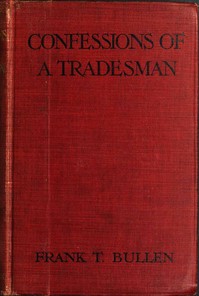
Confessions of a Tradesman — Key Ideas to Explore
(0 User reviews)
1372
Project Gutenberg
2020
Not confirmed
Business; London (England) -- Commerce
Readers of public-domain and historical texts
Project Gutenberg digital edition
en
Edition facts
Words
78,861
Reading time
343 min
Text sections
7
Before opening Confessions of a Tradesman — Key Ideas to Explore, the edition data offers a quick orientation: 78,861 words, 5 hr 43 min estimated reading time, and 7 detected text sections.
The text analysis averages about 29.1 words per sentence, while the detected sections provide another way to judge how the source is divided.
Project Gutenberg metadata also associates the work with “Business,” connecting these edition facts with the source record’s subject description.
Source:
Project Gutenberg record #63556
Frank T. Bullen recounts his transition from sailor to struggling London shopkeeper, detailing the harsh realities of small trade, credit systems, and County Court injustices with a plain, unvarnished voice.
Read the complete public-domain text at its original source.
Read on Project GutenbergFrank T. Bullen, known for his sea narratives, turns his attention ashore in Confessions of a Tradesman (1908), a memoir of his years as a small shopkeeper in London. The book opens with a defensive preface: Bullen acknowledges that critics expect an author to stick to one topic, but he insists his commercial experience—first as an errand boy, later as a struggling tradesman—is equally worthy of record. He describes leaving the sea at twenty-five for a clerk's wage of £2 per week, with a wife and child and no furniture, a decision that soon led him back to trade. The prose is direct, self-deprecating, and impatient with sentimentality.
The Voice of the Small Trader
Bullen’s diction is conspicuously plain, often colloquial, and occasionally sardonic. He writes of his early commercial “germs” lying dormant like disease germs, a simile that signals his unsentimental view of business. When describing the “hire system” for furniture, he calls it “very unsatisfactory” without elaboration, trusting the reader to know why. His sentences are short, declarative, and frequently begin with “And” or “But,” mimicking spoken narrative. The effect is that of a man talking directly to a listener, not writing for posterity. This voice is consistent throughout the excerpts: he reports his own astonishment at the “strange inequalities of justice” without rhetorical flourish, letting the facts carry the weight.
The Texture of Daily Struggle
Bullen’s descriptions of his working day are precise and unglamorous. He rises at half-past two or three in the morning, works furiously before his office job, and eats cheap meals: a halfpenny loaf, a pennyworth of cheese, a halfpenny beetroot, washed down with “mother-in-law” (stout and bitter). He records the cost of each item—threepence or fourpence for a meal, sixpence for a “sumptuous” one. These details are not decorative; they are evidence of a life lived on the edge of subsistence. The cook-shop’s “stewed steak” (actually shin of beef) for fourpence is remembered with a specificity that suggests the author has not forgotten the taste or the price. Such passages ground the memoir in material reality.
County Court as Theatre
Two court cases are presented in parallel, and Bullen’s handling of them reveals his method. In the first, a butcher sues a well-off debtor who pleads illness and unemployment; the butcher exposes the lies, and the debtor is ordered to pay five shillings a month. In the second, a clerk who voluntarily returned to pay a doctor’s bill is berated by the judge for questioning the fee and ordered to pay the full amount in a fortnight. Bullen offers no explicit moral, only “I make no comment, I only wonder.” The juxtaposition is deliberate: the reader is left to see the inconsistency. The butcher’s quoted dialect—“I gotter find a bloke like that in grub wot I gotter pye my hard-earned brass down on the nail fer”—is rendered with phonetic precision, adding a layer of class observation.
The Unromanticised Self
Bullen does not present himself as a hero. He admits his own improvidence, his lack of training in thrift, and his desperation. He describes his early commercial education as “irregular and entirely erratic.” When orders finally flow in, he works with “furious energy” but never claims this as virtue; it is simply what necessity demanded. The preface’s confession that he “absorbed some germs of a commercial spirit” is typical of his tone—self-mocking, analytical, and unpretentious. This refusal to sentimentalise his own struggle gives the memoir its credibility. He is not a triumphant survivor but a witness who has been through the mill and remembers every bruise.
Readers expecting the adventure of Bullen’s sea books will find a different kind of hazard here: the daily risk of insolvency, the indignity of County Court, the arithmetic of penny meals. The book’s value lies in its unadorned reportage of a world where a man’s credit is his life and a judge’s whim can break him. Bullen’s plain style suits his subject; he is not performing literary grace but delivering evidence. Approach Confessions of a Tradesman as a document of economic survival, told by a man who learned the trade the hard way.
That Bullen book stayed with me, not for its plot, but for its weary honesty about pride and penny-counting. It made me think about an older voice, one that weighed the same daily grind with a different sort of patience, found in The Complete English Tradesman (1839 ed.) — Edition Insights. Sometimes the quietest old books hold the truest silence about work.
There are no reviews for this eBook.
There are no comments for this eBook.
Reader reflection
Your personal reading reflection
Build a private reading journal entry for this title.
Your progress
0
/
10
2
What was your overall reaction to the book?
3
Would you pass this book on to a friend?
4
Did the language feel accessible?
5
Was the book moving at the right speed?
6
Did you gain anything practical from the text?
7
Did any part of the book feel personally relevant?
8
Did the book give you something worth debating?
9
What changed or sharpened your thinking?
10